
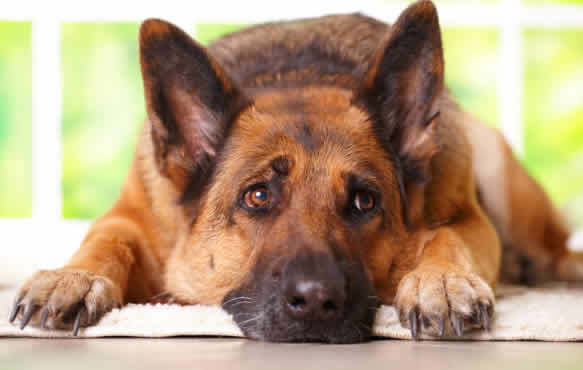
Hip Dysplasia
What is Hip Dysplasia?
Hip Dysplasia is a genetic condition in which there is a tendency towards development of hip problems, sometimes early in life.
The soft tissues that normally stabilise the hip joint can become loose within the first few weeks of life which makes the ball and socket of the hip joint unstable and deformed. Dogs with hip dysplasia almost always go on to develop arthritis of the hips.
What is the cause of Hip Dysplasia?
Hip dysplasia is of genetic cause. Environmental factors are unable to cause hip dysplasia. There is no evidence to support the concept that excessive exercise as a puppy or running up and down stairs can contribute to the development of hip dysplasia.
What happens inside the hip joint?
Pain is caused by micro-fracturing of the bone and cartilage surfaces that are rubbing against one another. As cartilage erodes, osteoarthritis and pain develop.
Hip dysplasia is of genetic cause. Environmental factors are unable to cause hip dysplasia. There is no evidence to support the concept that excessive exercise as a puppy or running up and down stairs can contribute to the development of hip dysplasia.
What happens inside the hip joint?
Pain is caused by micro-fracturing of the bone and cartilage surfaces that are rubbing against one another. As cartilage erodes, osteoarthritis and pain develop.
Treatment options for dogs with Hip Dysplasia
Common treatment options for dogs suffering from hip dysplasia range from changes in lifestyle and diet, to painkillers and surgery.
Various types of surgery can be performed if the disease is caught early and before there is too much joint damage, otherwise a complete hip replacement may be necessary.
There are three major surgeries for hip dysplasia:
Femoral Head and Neck Osteotomy (FHO)
This surgical treatment for hip dysplasia entails removing the femoral head (ball) of the hip joint, allowing the body to create a “false” joint. FHO can help to decrease the discomfort related to hip dysplasia, as the bones can no longer rub against each other although normal hip function is unlikely to be restored.
Double or triple pelvic osteotomy (DPO/TPO)
Typically performed on dogs younger than 10 months old, this surgery involves cutting the pelvic bone in specific locations and rotating the individual segments, resulting in an improvement in the anatomy of the ball and socket joint.
Total Hip Replacement (THR)
During THR surgery the dog’s entire hip joint is removed and replaced with a synthetic ball and socket. This surgery is considered end stage and can have a long recovery period.

How Stem Cell Therapy can help
Stem cell therapy can help to regenerate cartilage in the hip joints. Your dog can be treated with stem cell injections into the arthritic joints, restoring cartilage and function and reducing pain.
Stem cells contribute to regenerate and repair damaged tissue, as well as making new blood vessels inside the joint, and are highly anti-inflammatory. All of these effects help to reduce pain and enable your dog to become much more mobile.
Younger dogs with hip dysplasia can also benefit. Use of stem cells in dysplastic hip joints from an early age may limit arthritic changes and can represent a less invasive alternative to total hip replacement surgery.
What our stem cell treatment service includes
Our goal is to give every dog we treat the absolute best possible care because your dog’s happiness means the world to us.
We provide the gold standard of care and offer the very best cutting-edge treatments that are available including:
- Full initial consultation and physical exam with assessment and recommendations
- Blood tests to ensure suitability for regenerative medicine therapy
- Full radiograph service
- Injection of platelet-rich plasma (PRP) into joint(s)
- Preparation, counting and culture of stem cells
- Injection of stem cells into joint(s)
- Joint fluid replacement treatments
- Storage of stem cells for future use in our dedicated lab
- Comprehensive follow-up plan at 30, 60, 90, 180 and 360 days